
Like a train rolling down the tracks, time just keeps rolling along
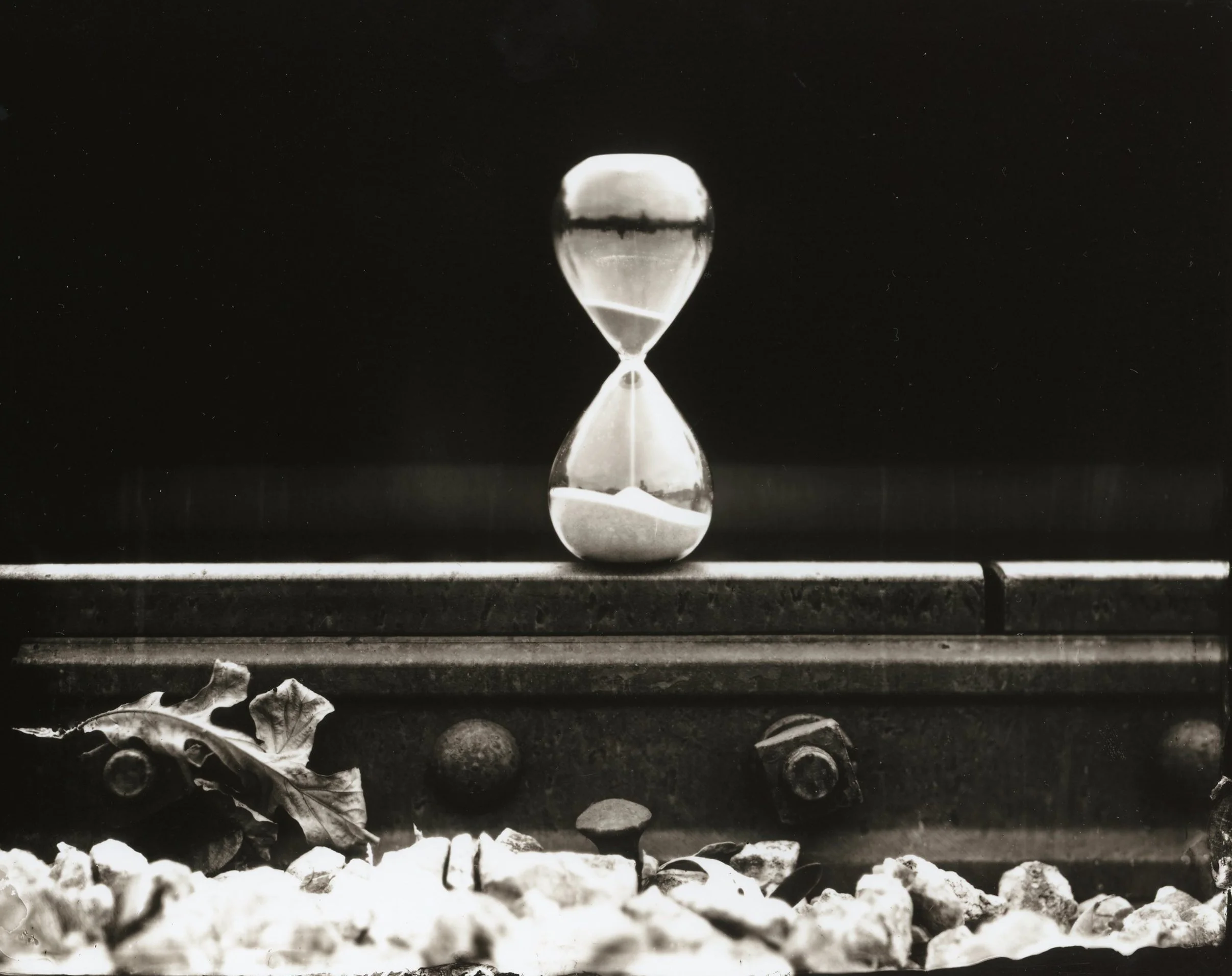
Consider the hourglass. It’s a simple ancient device that measures the passage of time, and to quote a famous soap opera monologue, “Like sands through the hourglass, so are the days of our lives.” This is actually very accurate. Turn an hourglass on its side and its ability to measure time is stopped, and its shape then takes on the appearance of the symbol for infinity.

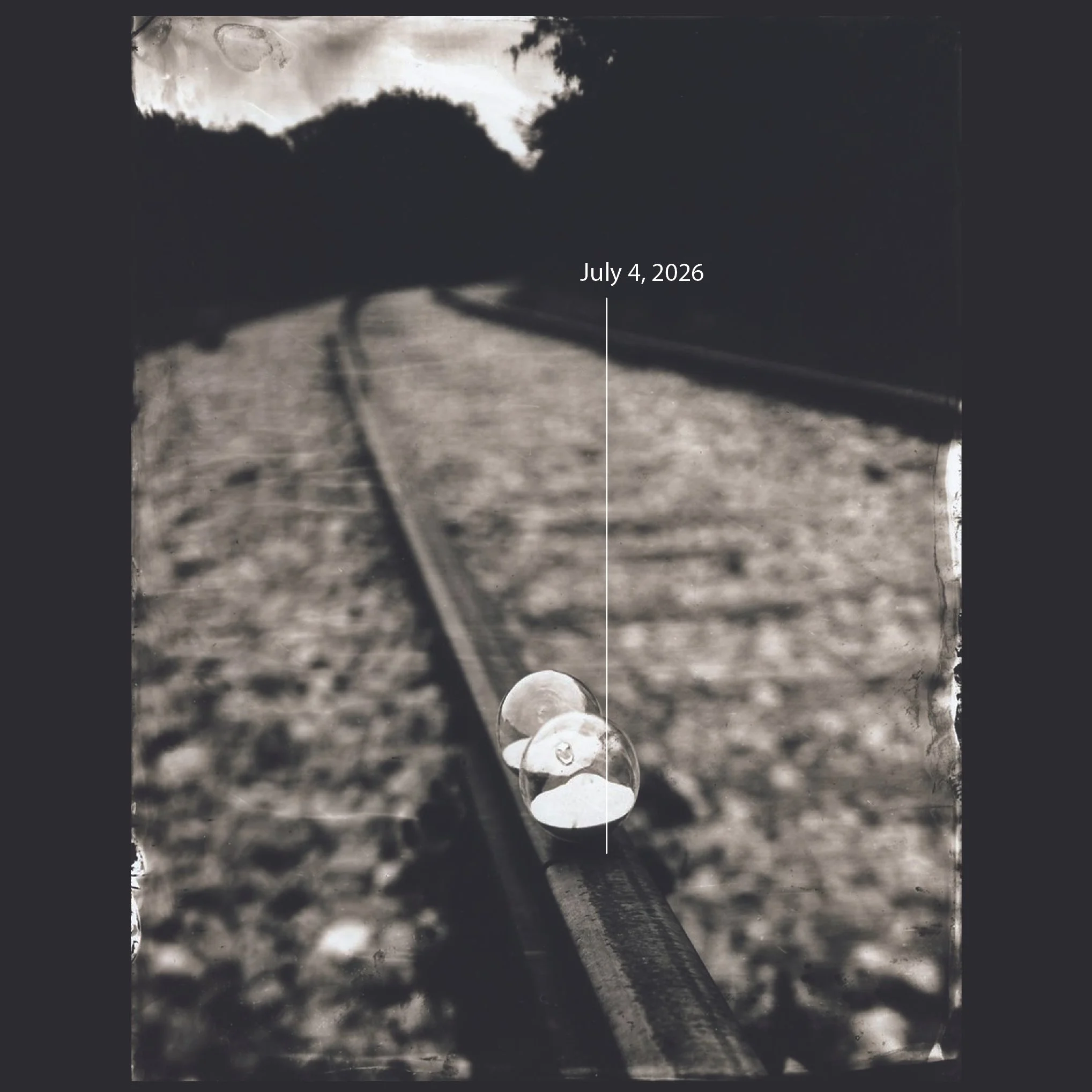
As I write this, it’s the year 2026 in the United States of America, where I was born and raised, in Texas. This is where I’m turning an hourglass on its side, at the seam on a railroad track, in order to stop time to look back up the line and measure just how long it took us all to get this far.
When we’re young, time feels like it goes by slowly. But as we get older, it feels like it’s quickly passing us by. But no matter how we perceive it, humans had to create a measurement for it. We measure time by the second, minutes, hours, days, years, centuries and millennia. But to get a perspective of just how far we’ve come, I’m converting the passage of time into a “length of time,” measurable by distance.
Depending upon where you’re located in the world, there’s obvious differences between the systems of measurement that we’ve created. The imperial system uses inches, feet, and miles. The metric system uses millimeters, meters, and kilometers.
For this exercise, one calendar year will be measured by 1 millimeter, or 39 thousandths of an inch (.039”). This is roughly the thickness of a credit card. Twenty-six of these “millimeter years” put together would equal approximately one inch. It’s the same “length of time” between January 1st, 2020 to July 4th, 2026, the 250th anniversary of the United States. Consider how much has happened with our technology just since the beginning of the 21st century, in 1 inch of time.
The hourglass I’m using is 7-½ inches long, which would be 190 years and 6 months in “millimeter years,” or about two human lifespans.
~ Looking back at our tracks ~
The seam on the track is the 4th of July 2026. The oldest evidence to date of humans on Earth is at approximately 307,000 years. Converting these “millimeter years” would be a “length of time” of ~335 yards back down the tracks away from the hourglass, or just over three American football fields.
Another human species that we shared the Earth with were the Neanderthals. They disappeared at around forty-five yards away, or less than half of a football field away.
As far as humans on the North American continent, evidence puts us here around 25,000 to 30,000 years ago, just over twenty-five yards, or a quarter of a football field away. But more evidence is being found each year that shows we may have been here a lot longer than that.
In contrast, to get to the location on the tracks where the prehistoric dinosaurs disappeared due to an asteroid impact, one would have to go back up the line over 40 miles, or 65 kilometers. So as much as we’d like to imagine that somewhere back in time there were people who had dinosaurs as pets, nobody ever did. Outside of birds, there was never any interaction between dinosaurs and humans. Birds are the only modern surviving dinosaurs.
During the bronze age, almost 1000 years before the Egyptians started building the pyramids, man began documenting, not cave painting, but formally writing things down. This is regarded as the beginning of “recorded history.” This would be only six yards away, or just over halfway to a first down on that football field.
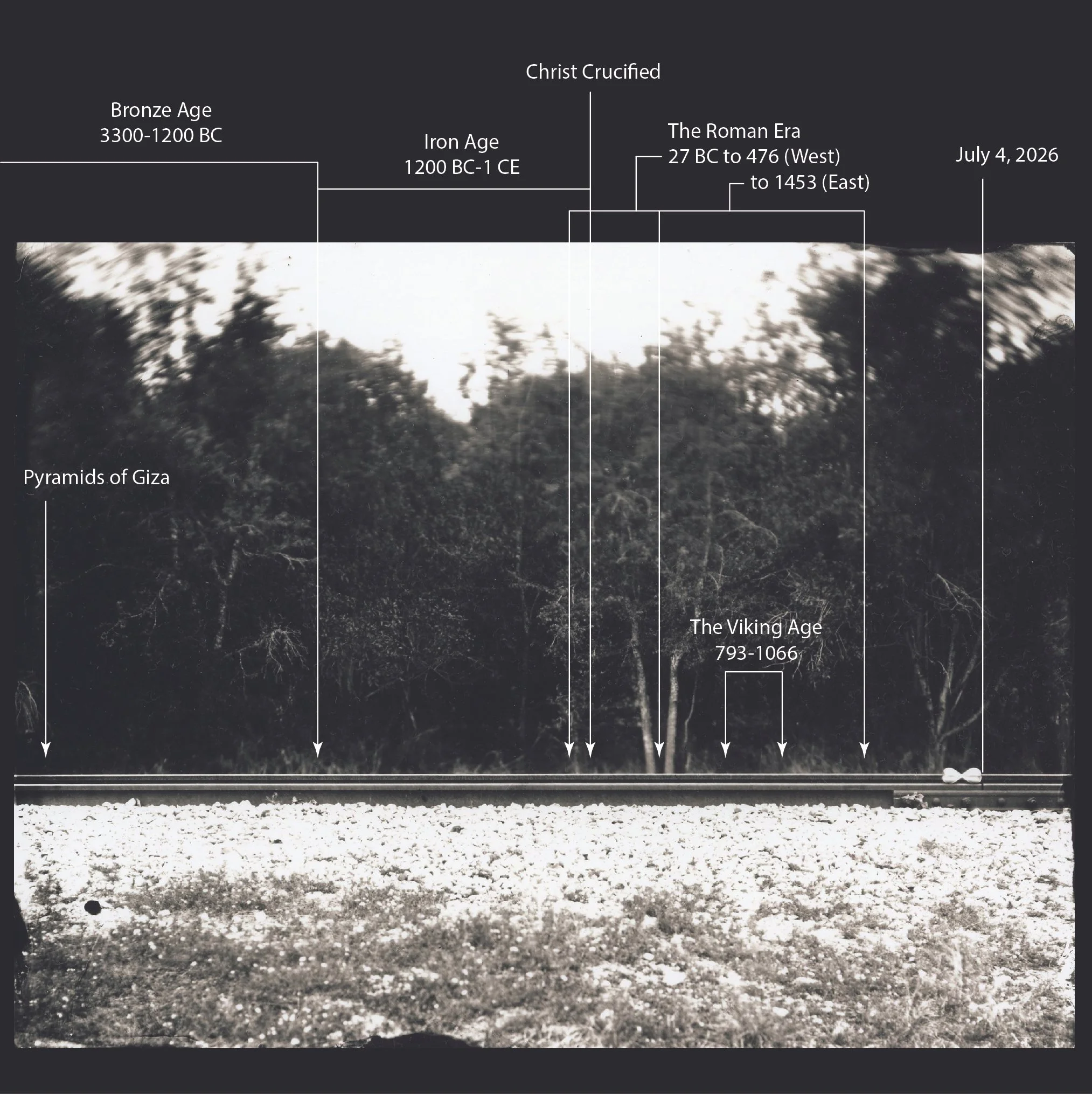
~ Markers for the ages ~
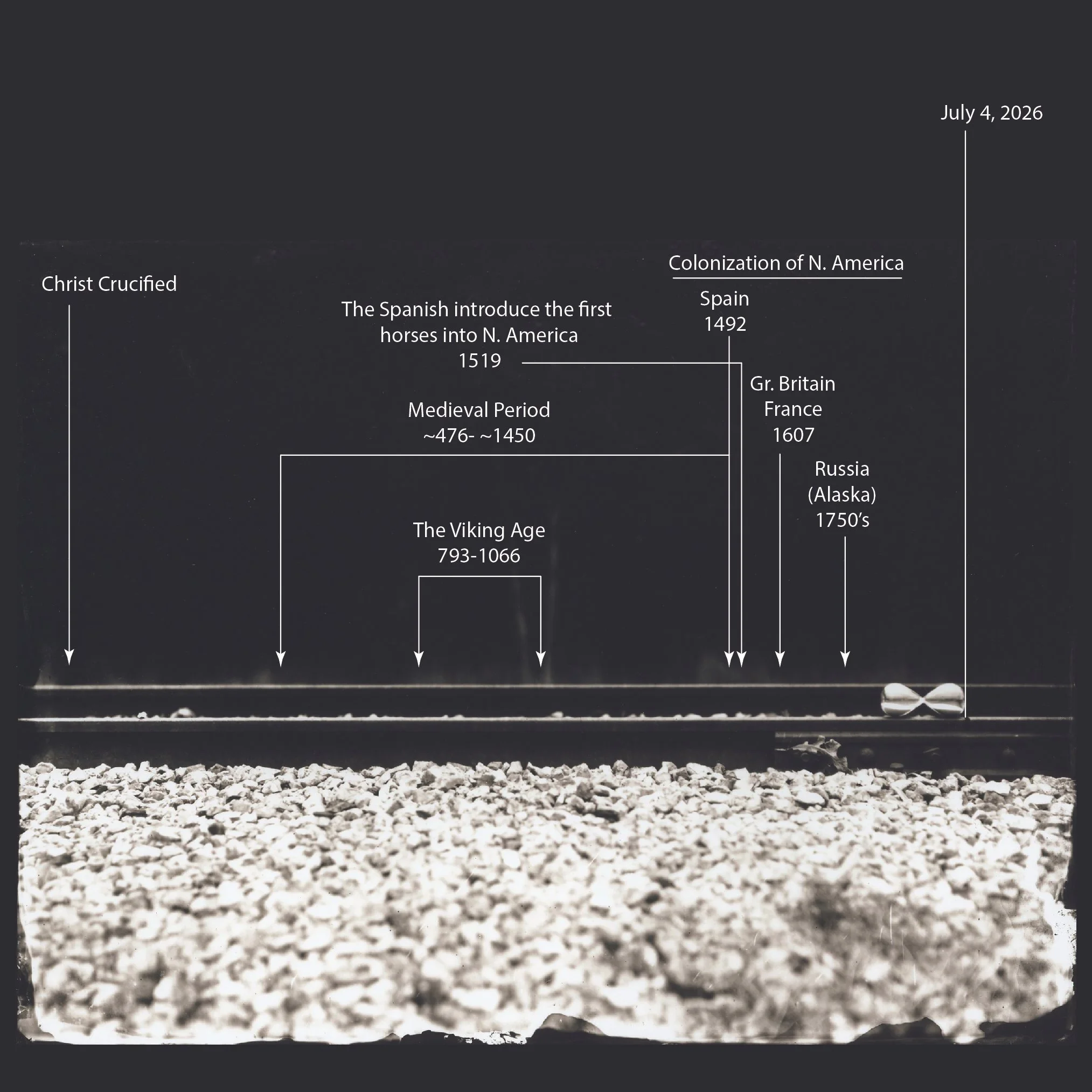
~ Markers for the ages ~
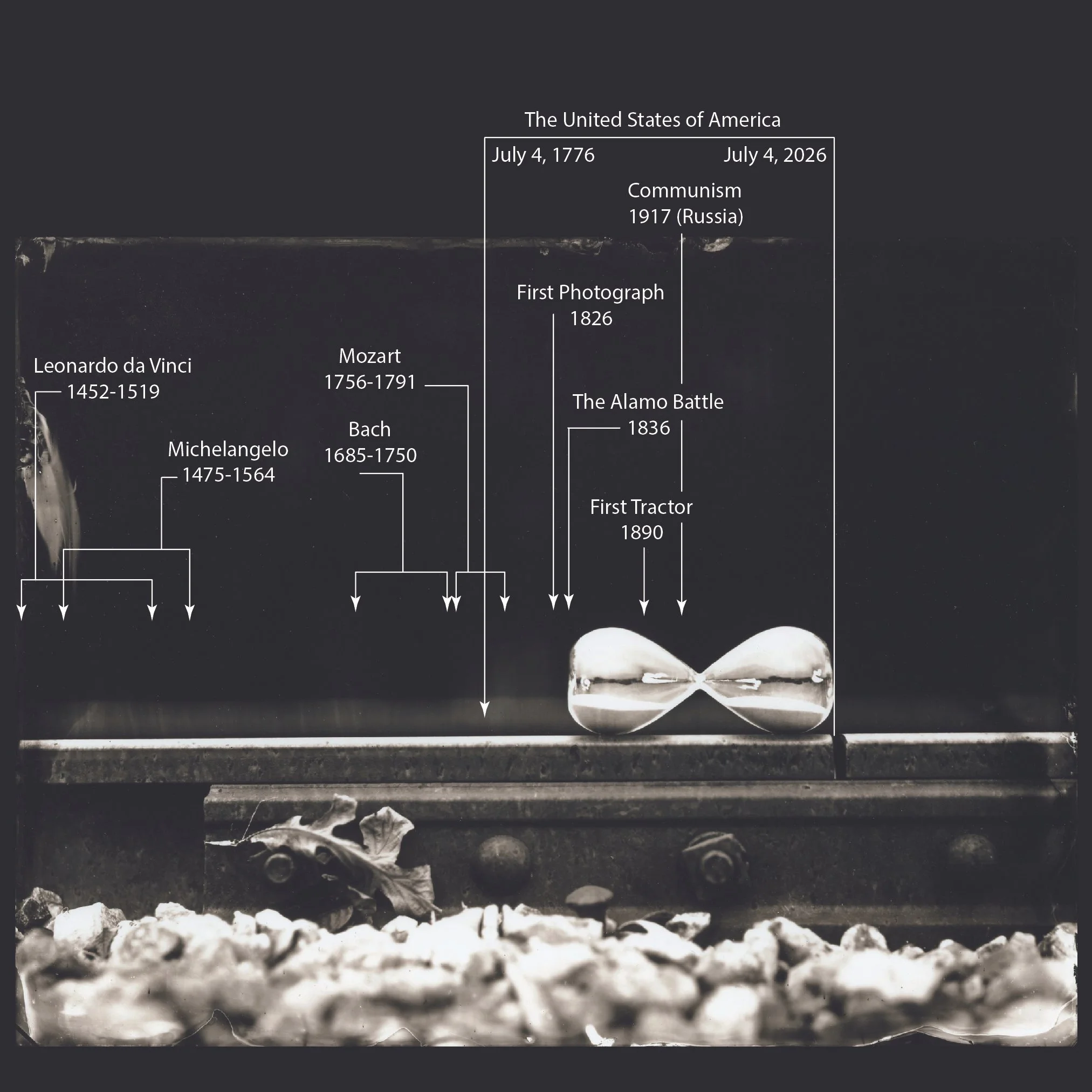
~ Markers for the ages ~
Keep in mind that 1/2 of the hourglass is a “length of time” equal to a person that is 95 years old.
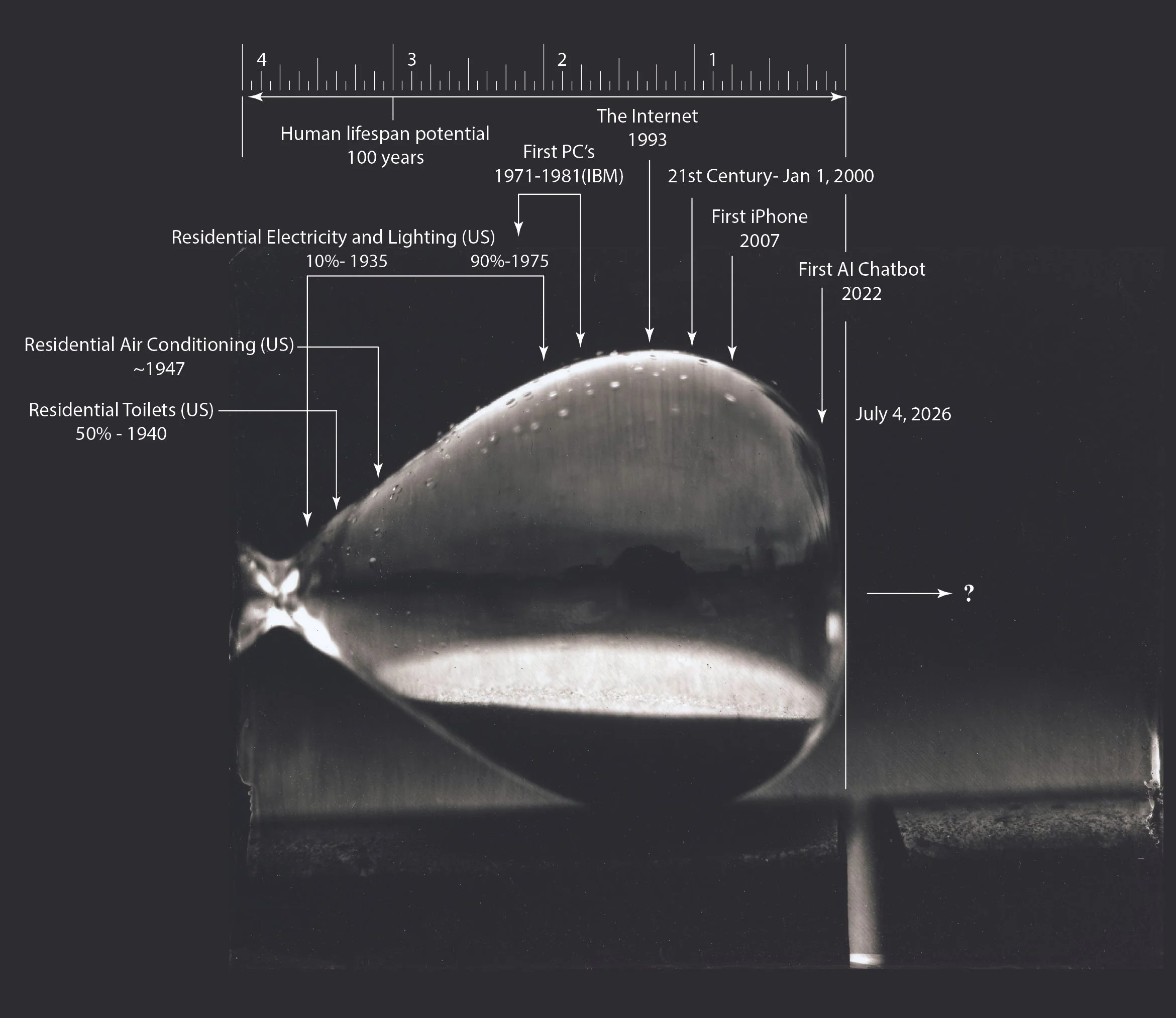
~ The Beautiful Sunrise, and the Beautiful Sunset ~
A young person 20-years-old in 2026 has never known this world without a smart phone or a computer. And it would be hard for them to imagine that this technology could back up an inch or two; to where none of these things would work. But this could easily happen. Our low-tech and high-tech comforts are all very new things to us, developed by us and not by nature. And while we can’t control nature at all, we’ve not been very good at controlling ourselves either.
For “centenarians,” their lifespans reach (and many exceed) 100 years (a four inch “length of time”). That same 20-year-old could have a conversation with somebody that was born in 1926, before the Great Depression, when the availability of telephones, residential toilets or air conditioning were uncommon. And when that person was ten years old, they could have been talking with someone who was born on the same day that the Alamo fell.
~ The Human Blip ~
Blip (noun):
1. Something relatively small or inconsequential within a larger context.
2. A temporary change that does not have any special meaning.
Humans are merely a “blip” on this Earth. As much as we might think highly of ourselves, humans are completely insignificant as far as our Earth is concerned. You could hike the forty or so miles back up the tracks to where the dinosaurs disappeared, but if you continued to walk the tracks for another 400 miles and could see the earth as it was then, you would find it lush and green.
As far as the “distance of our existence” goes, a train traveling at a mere 40 miles per hour would pass over our entire time on Earth in 10 seconds.
Whatever the cause is that ends us, whether by nature or by our own hands, after we’re gone, most traces of our existence will disappear in less than half a football field’s distance of time. And anyone showing up after that would still find a lush and green Earth.
Regarding wars or slavery, I left them out. Because they could fill the entire timeline all by themselves. To understand how long “man’s inhumanity to his fellow man” has been going on, you would not just have to go back up the line a few yards, but all the way back to where we first showed up.
~ Body, Mind, and Spirit ~
It’s what each of us is made of;
Our body is what we are born with.
Our mind is what gives us the logic to hopefully reach our most basic goal: to survive and procreate.
Our spirit is how we approach our own one chance at life.